
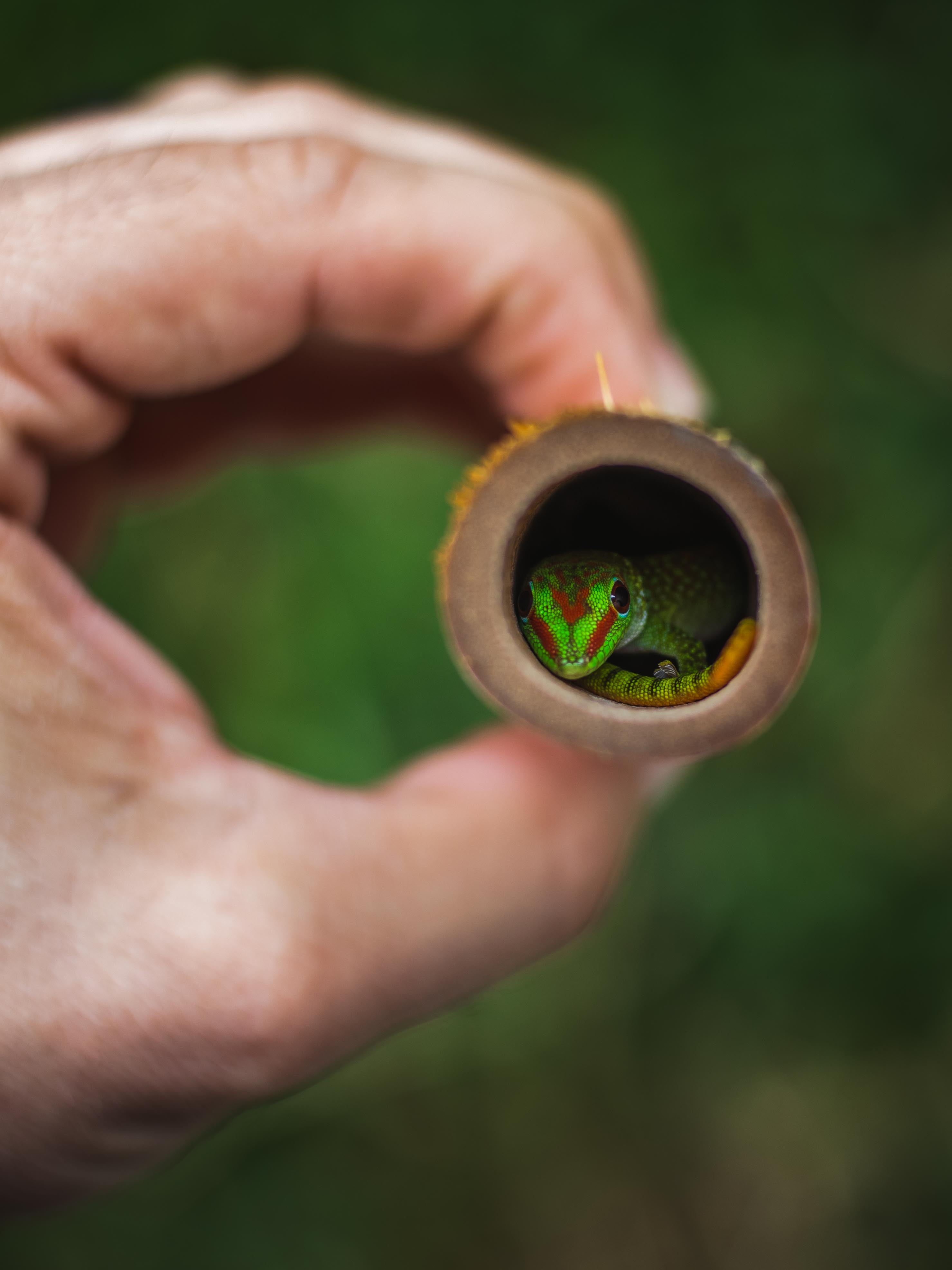
Madagascar Giant Day Gecko Care Guide
Phelsuma grandis
Common Names: Madagascar Giant Day Gecko, Giant Day Gecko
Last Updated: August 2026
Madagascar Giant Day Geckos (Phelsuma grandis) are striking, diurnal geckos native to Madagascar. Known for their vivid green coloration, red markings, large size, and active daytime behavior, they are one of the most recognizable species of day gecko.
Unlike many commonly kept geckos that are most active at night, Madagascar Giant Day Geckos are active during daylight hours. They spend much of their time climbing, basking, foraging, and moving through vegetation.
They can be incredibly rewarding display animals for keepers prepared to provide appropriate space, UVB lighting, heat, humidity, nutrition, enrichment, and long-term care.
Let’s break down what you need to help your Madagascar Giant Day Gecko thrive.
HOUSING
Enclosure Size
Madagascar Giant Day Geckos are active, arboreal animals that require a spacious habitat with substantial climbing opportunities.
Rather than focusing solely on one specific set of enclosure dimensions, consider the total usable space available to the animal.
A properly designed enclosure should allow the gecko to:
- Climb vertically
- Move horizontally and diagonally
- Bask beneath heat and UVB
- Retreat into shaded areas
- Forage and hunt
- Hide among vegetation
- Explore multiple levels
- Thermoregulate naturally
Young animals can be maintained in appropriately sized grow-out enclosures that make monitoring feeding, hydration, waste, growth, and overall health easier.
As the gecko grows, the enclosure should grow with it.
Adult Madagascar Giant Day Geckos should be provided with a spacious, vertically oriented habitat that allows for extensive climbing, basking, exploring, and natural movement.
Larger, thoughtfully furnished enclosures can provide additional opportunities for exercise, enrichment, and behavioral choice.
Housing Compatibility
We generally recommend housing Madagascar Giant Day Geckos individually.
Day Geckos can be territorial, and incompatible animals may compete for basking areas, food, hiding locations, and other resources.
Adult males should not be housed together.
Male and female animals may sometimes be maintained together by experienced keepers or breeders, but compatibility should never be assumed. Animals should be monitored closely, and separate housing should always be available.
Individual housing makes monitoring feeding, body condition, health, and behavior much easier.
Enclosure Setup & Enrichment
Madagascar Giant Day Geckos are highly active climbers and benefit from a densely structured habitat.
Provide a variety of:
- Vertical and diagonal branches
- Bamboo
- Cork bark
- Vines
- Broad leaves
- Live or artificial plants
- Elevated resting areas
- Basking surfaces
- Shaded retreats
- Multiple levels of foliage and cover
Smooth vertical and diagonal surfaces such as bamboo can provide excellent climbing and resting opportunities for Day Geckos.
Plants and foliage should be distributed throughout the enclosure while still leaving open pathways for movement.
The enclosure should include both brightly illuminated basking areas and shaded retreats so the gecko can regulate its own exposure to heat, visible light, and UVB.
Naturalistic and bioactive enclosures can provide additional opportunities for exploration and enrichment when properly designed and maintained.
Substrate
Paper towel is useful for quarantine, newly acquired animals, or when close monitoring of waste and health is necessary.
For established animals, naturalistic tropical substrates can also be used.
Bioactive setups may incorporate appropriate soil mixtures, coconut fiber, bark, leaf litter, live plants, and cleanup crews.
Avoid substrates containing fertilizers, pesticides, aromatic wood products, or other potentially harmful materials.
TEMPERATURE, LIGHTING & HUMIDITY
Temperature
Because Madagascar Giant Day Geckos are diurnal basking reptiles, they should have access to a clear temperature gradient.
A good general range is:
Daytime Ambient: Approximately 75–82°F
Basking Area: Approximately 85–90°F
Cooler Areas: Approximately 72–78°F
Night: Approximately 68–75°F
A dedicated basking area allows the gecko to raise its body temperature when needed while cooler portions of the enclosure provide an opportunity to retreat.
Current husbandry sources commonly recommend a basking temperature in the upper 80s°F for this species.
Any supplemental heating should be appropriately controlled and positioned so that it creates a localized basking zone rather than overheating the entire enclosure.
Always monitor basking and ambient temperatures with accurate digital thermometers or an infrared temperature device.
Lighting
Lighting is an especially important component of Madagascar Giant Day Gecko husbandry.
These geckos are diurnal, meaning they are naturally active during daylight hours.
Provide approximately 12 hours of light and 12 hours of darkness for most captive setups.
A bright, full-spectrum LED can provide strong visible illumination while also supporting live plant growth.
Day Geckos generally thrive in brightly illuminated enclosures that include a mixture of open basking areas and shaded retreats.
Avoid red, blue, or other colored nighttime bulbs. The enclosure should become dark at night.
UVB
We strongly recommend appropriate UVB lighting for Madagascar Giant Day Geckos.
UVB contributes to natural vitamin D3 production and supports proper calcium metabolism, skeletal health, and other physiological processes.
Because Day Geckos actively bask during daylight hours, UVB should be provided alongside appropriate visible light and heat to create a functional basking area.
UVB strength and placement should be selected based on:
- Fixture type
- Bulb output
- Distance from the basking surface
- Enclosure height
- Screen obstruction
- Available shade
- Manufacturer recommendations
The enclosure should contain both UVB-exposed basking areas and heavily shaded areas so the gecko can regulate its own exposure.
UVB should not be placed behind glass or acrylic because these materials significantly reduce or block UVB radiation.
UVB bulbs should also be replaced according to the manufacturer’s recommended schedule, even if they continue producing visible light.
Humidity
Madagascar Giant Day Geckos require moderate to high humidity but should not be maintained in constantly saturated conditions.
A natural daily humidity cycle is preferable.
A useful general target is approximately:
Daytime: 40–70%
After Misting / Nighttime: Approximately 70–80%+
Humidity should rise following misting and naturally decrease during the warmer daylight period.
Current ReptiFiles guidance recommends an average humidity range of approximately 40–75%, with normal variation between warmer, cooler, daytime, and nighttime areas.
Misting frequency will vary based on enclosure design, ventilation, substrate, plants, room humidity, and local climate.
For many setups, one substantial evening misting plus additional misting as needed works well.
Proper ventilation is extremely important.
Avoid keeping the enclosure continuously wet or stagnant, as excessive moisture combined with inadequate airflow can contribute to mold, bacterial growth, and respiratory problems.
Use a reliable digital hygrometer to monitor conditions rather than relying solely on a predetermined misting schedule.
FEEDING & WATER
Diet
Madagascar Giant Day Geckos are omnivorous.
In the wild, they consume insects and other invertebrates as well as soft fruit, nectar, and pollen. They have even been observed visiting flowers to feed on nectar.
A varied captive diet should therefore include both appropriately sized live insects and a nutritionally complete fruit-and-nectar-style gecko diet.
Complete Gecko Diet
Commercially prepared diets such as appropriate Pangea, Repashy, or similar complete gecko diets can provide the fruit and nectar portion of the diet.
These products are preferable to relying heavily on baby food, honey, or plain fruit because properly formulated diets provide more balanced nutrition.
Prepare the diet according to the manufacturer’s instructions.
Complete gecko diet can generally be offered several times per week, with feeding frequency adjusted according to age, body condition, reproductive status, activity level, and overall diet.
Remove uneaten prepared food before it spoils.
Small amounts of appropriate fresh fruit may occasionally be offered as enrichment, but should not replace a nutritionally complete diet.
Insects
Live insects should also be a regular part of a Madagascar Giant Day Gecko’s diet.
Good feeder options include:
- Crickets
- Dubia or discoid roaches
- Black soldier fly larvae
- Silkworms
- Other appropriately sized, nutritionally suitable feeder insects
Feeder insects should be properly gut-loaded before feeding.
Appropriate calcium and vitamin supplementation should be used based on the gecko’s overall diet and UVB exposure.
For many healthy adults, insects can be offered approximately two or three times per week, with younger growing animals potentially receiving insects more frequently.
High-fat feeders such as waxworms should be reserved for occasional use.
Water
A shallow dish of clean, fresh water should always be available.
Madagascar Giant Day Geckos also commonly drink water droplets from leaves, branches, glass, and other enclosure surfaces following misting.
Replace drinking water regularly and keep the dish clean.
HANDLING & INTERACTION
Madagascar Giant Day Geckos are best appreciated primarily as display animals rather than frequent handling pets.
They are extremely fast, agile, and capable of sudden movement.
Their skin is also considerably more delicate than that of many commonly handled gecko species.
Give New Geckos Time to Settle
Allow a newly acquired Day Gecko time to acclimate to its enclosure before attempting unnecessary interaction.
Give the animal an opportunity to establish normal feeding, basking, drinking, and activity first.
Minimize Routine Handling
Routine handling should generally be kept to a minimum.
Whenever possible, enclosure maintenance and routine observation should be performed without physically restraining the gecko.
When handling is necessary, move slowly and calmly.
Never Grab or Squeeze
Do not tightly grip a Madagascar Giant Day Gecko.
Day Gecko skin can be delicate and may tear or detach when the animal is restrained roughly.
Never grab the gecko by its tail.
Like many geckos, Madagascar Giant Day Geckos can drop their tails as a defense mechanism.
Use a Secure Environment
Because Day Geckos are extremely fast, any necessary handling should take place in a secure room where escape routes such as open doors, vents, and windows have been eliminated.
Whenever possible, encourage the gecko to move into a temporary container rather than physically grabbing it.
Watch for Stress
Rapid escape attempts, persistent hiding, defensive behavior, or frantic movement can indicate stress.
If handling is not medically or practically necessary, allow the gecko to remain inside its enclosure.
Keep Other Pets Away
Never allow a Madagascar Giant Day Gecko to interact directly with cats, dogs, or other household pets.
Even brief encounters can result in serious injury.
ROUTINE HEALTH & MONITORING
Learning what is normal for your individual Madagascar Giant Day Gecko makes it easier to recognize changes early.
Regularly monitor:
- Body weight and body condition
- Appetite
- Feeding response
- Feces and urates
- Activity level
- Basking behavior
- Eyes and skin
- Toes and feet
- Jaw and bone structure
- Tail condition
- Shedding
- Hydration
- Breathing
- Changes in behavior
A digital gram scale can be useful for monitoring body condition and identifying unexplained weight changes.
Shedding
Healthy Madagascar Giant Day Geckos periodically shed their skin.
Proper hydration, humidity cycles, nutrition, and access to appropriately textured surfaces help support normal shedding.
Check the toes and feet carefully for retained shed.
Because Day Gecko skin is delicate, avoid attempting to forcibly remove attached skin unless medically necessary.
When to Contact a Veterinarian
Contact a veterinarian experienced with reptiles if your gecko develops concerning symptoms such as:
- Significant or unexplained weight loss
- Persistent loss of appetite combined with other symptoms
- Swelling
- Abnormal jaw or limb structure
- Difficulty climbing
- Persistent retained shed
- Difficulty breathing
- Discharge from the eyes, nose, or mouth
- Significant lethargy or weakness
- Persistent abnormal feces
- Skin wounds or injuries
- Neurological symptoms
- Any sudden or significant change in normal behavior
Routine wellness examinations with a qualified reptile veterinarian can also be an important part of preventative care.
FINAL THOUGHTS
Madagascar Giant Day Geckos are spectacular animals.
Their brilliant coloration, daytime activity, climbing ability, basking behavior, and constant movement make them exceptional display reptiles when provided with an appropriate environment.
Responsible ownership begins with understanding that this is an active, diurnal species with different requirements than many commonly kept nocturnal geckos.
A spacious and complex habitat, plentiful climbing structures, bright visible lighting, appropriate UVB, a proper basking gradient, natural humidity cycles, a varied omnivorous diet, fresh water, enrichment, and regular health monitoring all help create an environment where a Madagascar Giant Day Gecko can display its natural behaviors and thrive.
Reptile husbandry continues to evolve as we learn more about animal welfare, nutrition, lighting, and natural behavior. We encourage every keeper to continue learning and to adjust their husbandry as better information becomes available.
At Guardians of the Geckos, our goal isn’t simply to produce incredible geckos. We want every animal we produce to go into a home prepared to provide excellent lifelong care.
Passion. Innovation. Genetics.
This care guide provides general husbandry information and is not a substitute for veterinary advice. Individual animals and circumstances may require different care. If you have concerns about the health of your Madagascar Giant Day Gecko, consult a qualified reptile veterinarian.